
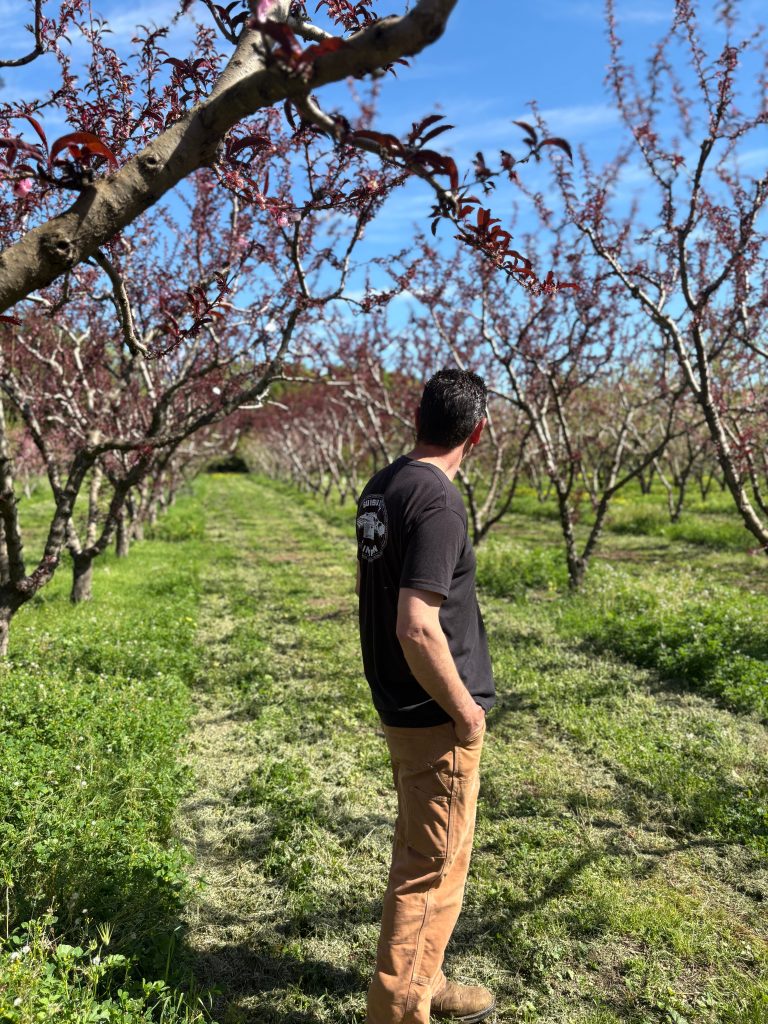
On a warm afternoon during a beautiful experience, we followed the Tenbrink family through their fruit orchard, brushing past cover crops and wild-looking grasses. Under our feet, the ground felt firm but alive. They knelt to show us roots, tiny nodules, insect life, and flowers. This taught us that what happens underfoot is where the story begins.
When people talk about wine regions, they usually mention climate, sunshine, or grape varieties.
But beneath every vineyard lies something just as important: the soil.
Soil influences how vines grow, water drains, nutrients move through the ground, and produce develops its flavor. In wine, that relationship between land and flavor is often described as terroir: the mix of soil, climate, and farming practices that shape a wine’s character.
In Suisun Valley, that story begins with loam
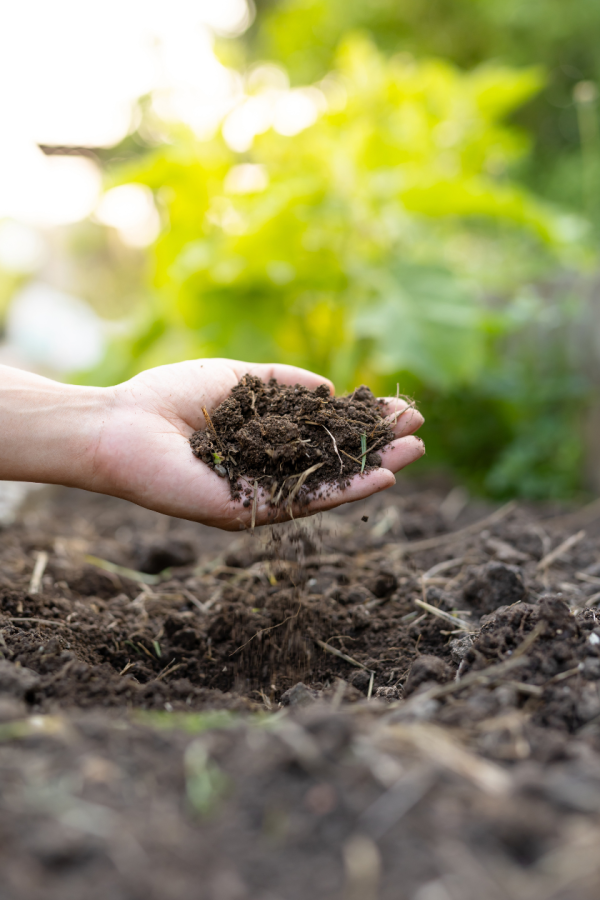
What Is Loam?
Loam is often considered the ideal agricultural soil because it contains a balanced mixture of
- Sand
- Silt
- Clay
- Organic matter
This balance lets soil hold moisture while still draining well and allowing roots to breathe. For farmers, loam offers the best of both worlds: fertility and structure.
That is one reason Suisun Valley has supported agriculture for generations, from vineyards and olive groves to orchards, produce farms, and flower fields.
During our leisurely walk with the Tenbrinks, they talked about soil as a living community. Microorganisms, roots, and fungi form a communication system underground. The roots send signals about what they need; soil life breaks down nutrients and makes them available. They compared it to your gut microbiome: if the system is diverse and healthy, the whole body, or in this case, the tree and the fruit, thrives.
Within Suisun Valley, several types of loam create subtle variations in the land, and those variations influence the wines and crops grown here.
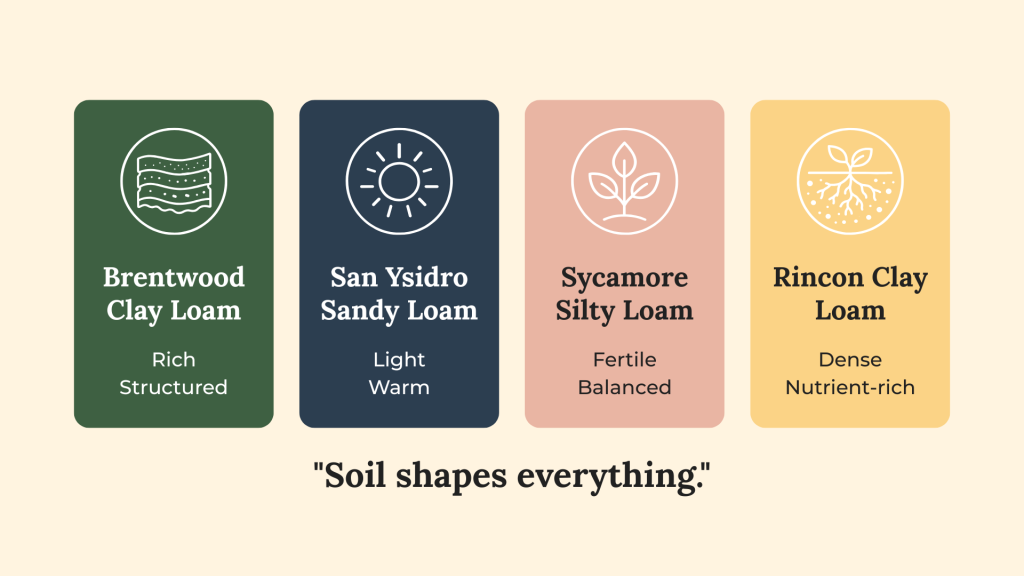
The Four Loams of Suisun Valley
Brentwood Clay Loam
Rich and Structured Brentwood clay loam contains a higher percentage of clay, which helps retain water and nutrients. This soil tends to produce:- Strong vine growth
- Concentrated fruit
- Structured wines
San Ysidro Sandy Loam
Light and Warm
San Ysidro sandy loam contains more sand, which makes it lighter and faster-draining. Sandy soils tend to:
- Warm quickly in spring
- Encourage deep root growth
- Produce elegant, aromatic wines
Because water drains more easily, vines often work a little harder in sandy soils, which can lead to beautifully expressive fruit.
In sandier areas of the region, you will often see different irrigation choices, sometimes sprinklers or flood irrigation instead of drip, because the water moves through so quickly. Those decisions come back to the soil and the crop: how fast the ground drains, how deep the roots reach, and how much stress the grower wants the plant to feel.
Sycamore Silty Loam
Fertile and Balanced
Sycamore silty loam sits somewhere in the middle.
Silt particles create soil that holds nutrients well while still allowing good drainage. These soils often support:
- Balanced vine growth
- Consistent yields
- Expressive but harmonious wines
Many farmers appreciate silty loam because it provides a stable growing environment for a wide variety of crops.
Walk a silty block in Suisun Valley, and you will often see diversity at work: cover crops growing between rows, insects buzzing, wildflowers mixed with grasses. It may look like a “wild mess” at first glance, but as we learned on our tour, “it is intentional.” That diversity keeps the living system in balance, much like a healthy, varied diet keeps your gut microbiome strong.
Rincon Clay Loam
Dense and Nutrient-Rich
Rincon clay loam contains dense clay particles and rich organic matter. This type of soil can:
- Hold nutrients effectively
- Support vigorous plant growth
- Produce bold fruit flavors
With careful farming, clay-rich soils can yield grapes with deep color and structure.
Here, organic matter is crucial. Farmers add compost, build carbon, and protect the soil surface so microorganisms have somewhere to live and feed. As one Tenbrink family member put it, “When you take good care of the trees, you’re going to have nice fruit.” Healthy soil life is what turns nutrients into flavor.
Why Soil Matters in Wine (and Beyond)
Different soils influence how vines grow and how grapes ripen. Clay soils often contribute to fuller-bodied wines, while sandy soils can produce more aromatic, lighter styles. Silty soils tend to support balance and consistency in the fruit.
In Suisun Valley, vineyards are often planted across a patchwork of these soils, which gives winemakers a wide range of fruit expressions to work with. The result is a region that can produce many styles of wine within a relatively small geographic area.
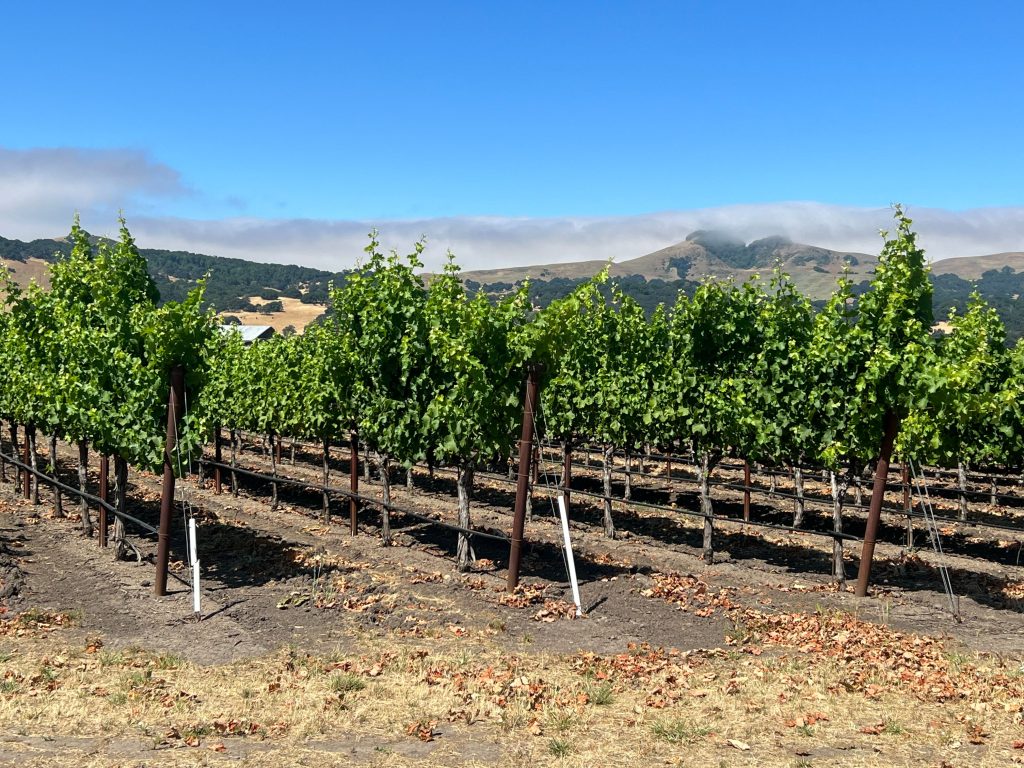
On our leisurely tour, the Tenbrinks pointed out how these same principles apply to stone fruit, citrus, and even walnuts. You can see it in the way fruit colors up, how intensely it tastes, and how the trees respond when water is added too quickly or withheld at the right moment. Soil, water, roots, and flavor are always in conversation.
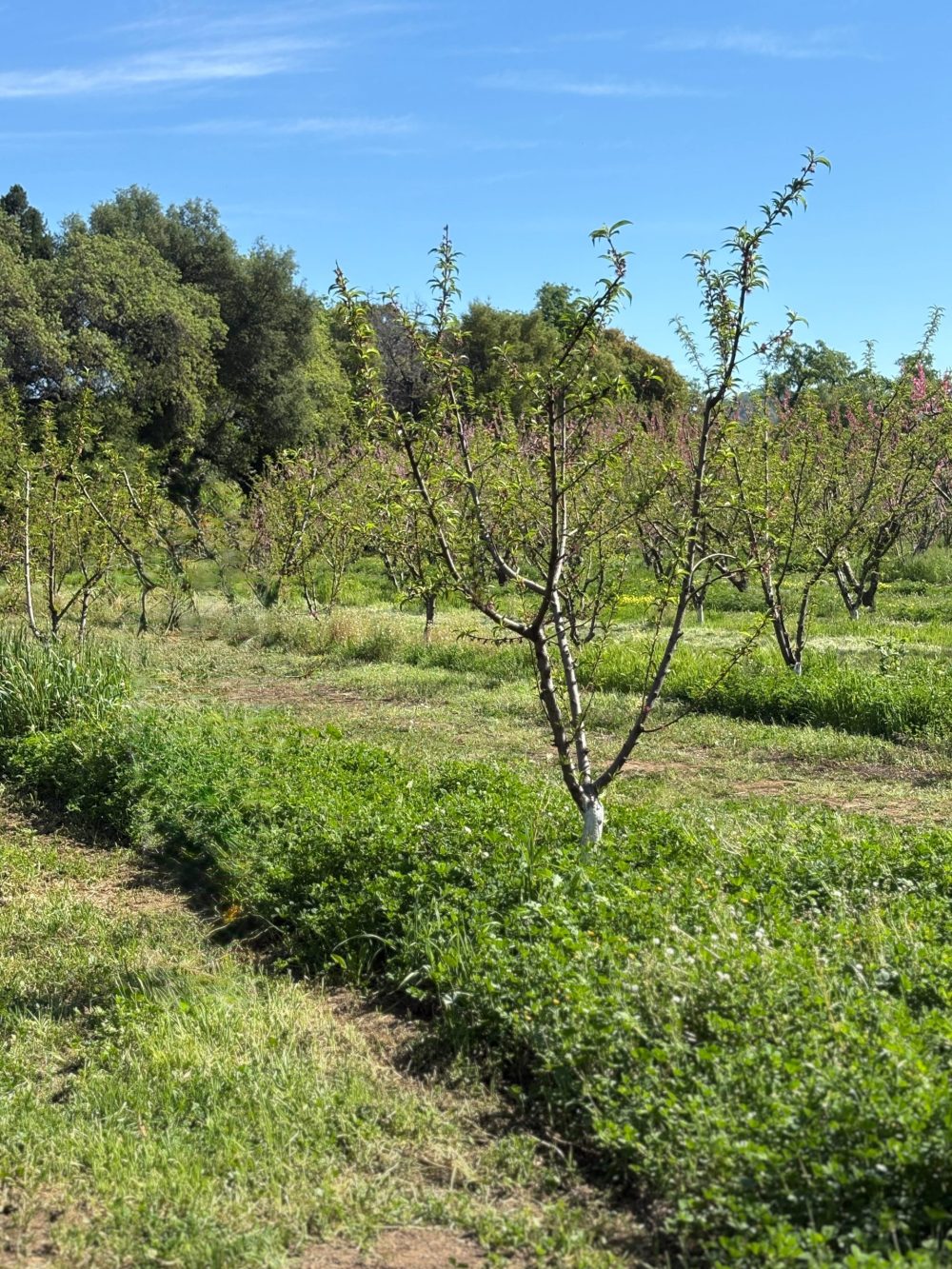
Soil Shapes More Than Wine
The valley’s loamy soils support much more than vineyards. You will also find olive groves, orchards, flower farms, vegetable farms, and specialty crops.
Many of these farms, like the Tenbrink property, sit on what is officially rated as “prime” agricultural soil, a designation for some of the best land in the world for growing food. In Suisun Valley, much of this prime soil has been deliberately protected through agricultural preserves and land trusts so it can remain farmland for future generations.
That commitment to the land is a big part of why Suisun Valley remains a diverse, working agricultural landscape instead of becoming just another stretch of urban development.
The Land Beneath the Glass
When you sip a glass of wine from Suisun Valley, you taste more than grapes.
You taste sunshine, climate, intentional farming practices, and the soil beneath the vines.
The next time you visit, take a moment between sips to notice the ground beneath your feet: the color and texture of the soil, the cover crops and wildflowers tucked between vines, the way water moves, or does not move, after a rain. Those small details are part of the flavor story.
We created the Suisun Valley Passport Journal as a companion for moments like this, a place to note not just what you tasted, but where you stood, who you met, and what the land beneath you looked and felt like.
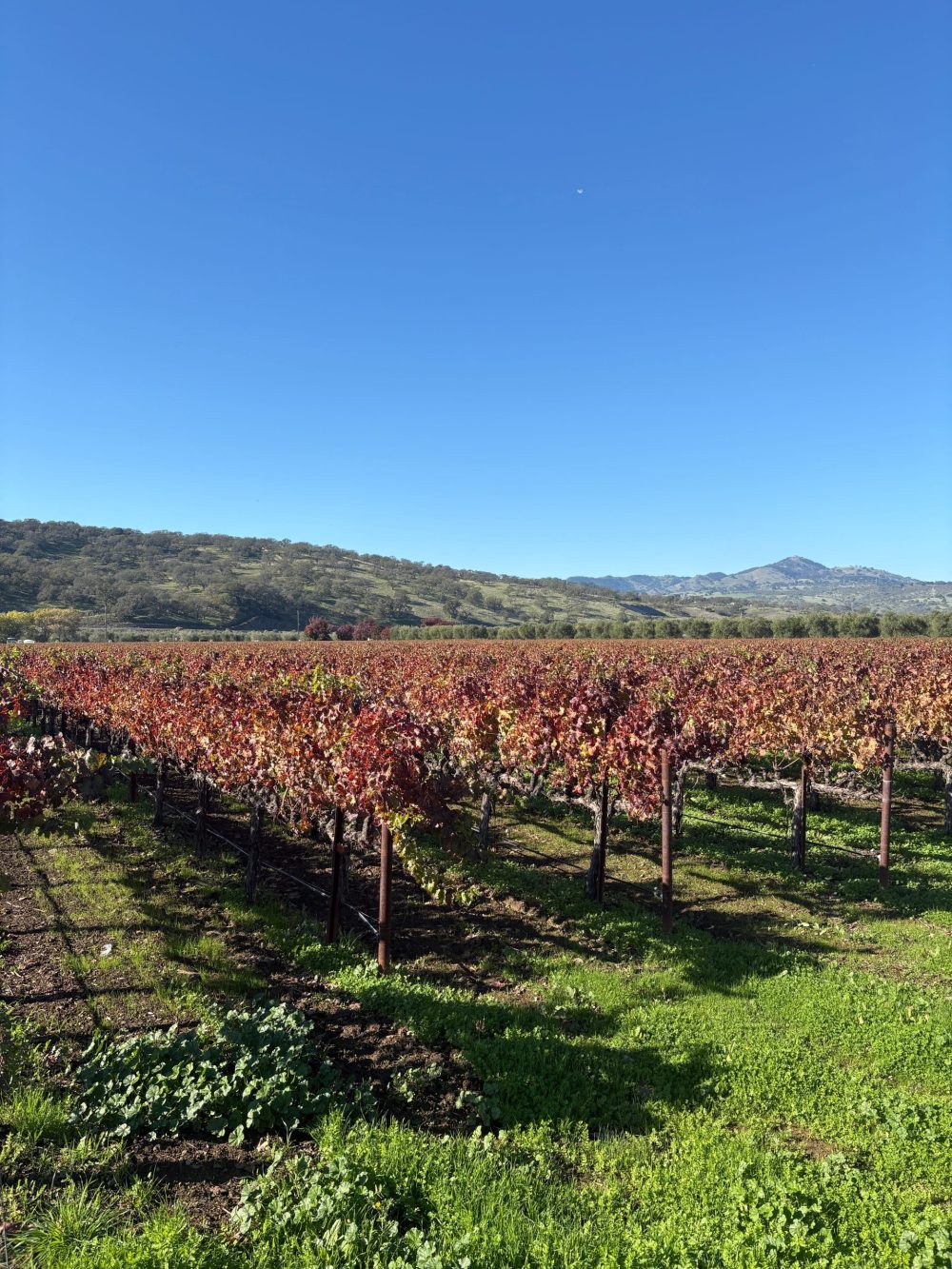
In Suisun Valley, the story of every glass begins in four distinctive loams that help shape the flavors of the valley.
FAQ: Suisun Valley Soils and Terroir
What makes Suisun Valley’s soil unique?
Suisun Valley sits on a high concentration of “prime” agricultural soil, rare, highly rated land that combines excellent fertility with good drainage. Much of it is preserved in perpetuity for agriculture, which means the same soils that grow peaches and citrus also support vineyards and other crops for the long term.
What else will I find in Suisun Valley besides wine?
Quite a lot. Wine is an important part of the valley’s identity, but it is only one piece of a much larger agricultural mosaic that includes orchards, olives, vegetables, flowers, and more. That diversity is a big part of what gives the region its character and resilience.
How can visitors experience the soils for themselves?
Look for experiences that get you on the land: walking tours with farmers, vineyard visits that include time between the rows, and farm stands where you can taste what grows in different parts of the valley. Bring a notebook or your Suisun Valley Passport Journal and jot down what you notice as you go, from soil texture to fruit flavors.